
 English
 Español
 Português

Dr. Keith Bramwell
Great experience in Poultry, Reproductive physiology, Embryology, Hatcheries and Incubation
View profile
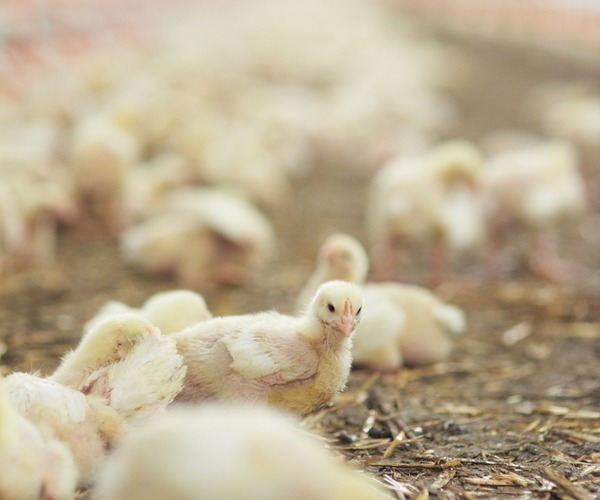
The Poultry Hatchery Course has the collaboration of recognized international experts in incubation and is academically endorsed by North Carolina State University - USA. This course offers a complete overview of incubator management through a series of key topics organized in 31 online lessons.
Technical skills development: To provide participants with practical knowledge of incubation processes, egg handling and control of environmental conditions.
Knowledge of biology and physiology: To teach about embryonic development and the specific needs of the species being incubated.
Incubator management: Training in the use and maintenance of incubators, as well as in the optimization of their operation to improve hatching rates.
Hatchery project management: To provide tools for planning and managing hatchery projects, from conception to implementation and evaluation.
Sustainability and ethics: To promote sustainable and ethical practices in hatcheries, considering animal welfare and environmental impact.
Research and development: Promote research in innovative hatchery techniques and the development of new methodologies.
Networking and collaboration: To facilitate contact between professionals in the sector, promoting the exchange of experiences and knowledge.
31 lessons · 31 h
Great experience in Poultry, Reproductive physiology, Embryology, Hatcheries and Incubation
View profile
Professor and Extension Specialist in Broiler Nutrition and Management at the Prestage Department of Poultry Science, North Carolina State U…
View profile
Dinah Nicholson started working for Aviagen (then Ross Breeders) in 1985, after completing her degree. Between degrees, she held two researc…
View profile
She has recently finished her PhD in May of 2022 and began working with Cobb-Vantress as a Hatchery/Breeder Specialist and now she is the se…
View profile
AERES University for Applied Sciences – Poultry Research & Education
View profile
After receiving a Bsc degree from the agricultural college in Leeuwarden, the Netherlands, Ron has worked for 13 years as researcher at the…
View profile
Following his academic pursuits, Eduardo became a member of the Petersime team responsible for establishing their initial single-stage hatch…
View profile
Nick completed his first degree in Zoology and Psychology at the University of Bristol, UK and then when to the University of Bath, UK to co…
View profile
Maple leaf Farms – Ducks 24 years in the duck industry / Hy-Line North America – Layers 10 years in the Layer industry
View profile
He began his career co-managing a company with responsibilities that spanned from the complete production side to the supply chain to the cu…
View profile
She developed her doctoral studies in Germany while working as a researcher in the genetics department at Lohmann Tierzucht (Cuxhaven), espe…
View profile
In 2017, she completed her master’s degree in Agricultural and Food Economics at the University of Bonn. Worked as a "Quality Manager for In…
View profile
Experienced professional with a demonstrated history of outstanding work in education, research, and the agricultural industry. Working alon…
View profile
Veterinarian, graduate of the National University of Costa Rica.
View profile
Dr Rodakis started in private practice. Thereafter, she moved into the poultry industry in 2012 and is currently the technical manager for P…
View profile
MBA, Thammasat Business School, Thailand (2022). BEng Automotive Engineering, University of Sunderland, UK (2014). High School Diploma, Cana…
View profile
Incubation Specialist with experience in hatchery support across the Americas. Former Technical Service Manager at Aviagen Brazil and Poultr…
View profileVolume pricing and one code per seat.

To obtain the ‘Certificate of Excellence’, it is necessary to pass the final exam with a mark higher than 85% and to complete a short and quality final paper.

Este curso está cerrado. Déjanos tu correo y te avisaremos de nuevas oportunidades para cursarlo.
Para poder acceder al contenido del curso es necesario que completes tu perfil. Por favor, rellena los datos que se muestran a continuación.

Para recibir el descuento del 50%, tienes que adjuntar un comprobante que certifique que eres estudiante